Port Phillip has always taken a compassionate and practical approach to supporting people experiencing homelessness. Through programs like Feel Safe Be Safe, our Housing and Homelessness Strategy, Port Phillip Zero, we continue to work closely with service providers to address the real causes of rough sleeping. This will not change.
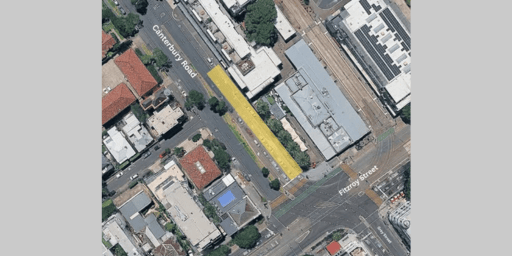
Late last year just as we were elected, we faced a situation in the Jackson Street car park off Fitzroy Street where 10 to 15 or even more individuals established an encampment for seven weeks. Residents and traders living nearby experienced serious impacts: visible drug use, rubbish, noise, aggressive behaviour, and people defecating and urinating on private property. Many residents told us they felt unsafe and unable to sleep. They came to the Chamber to tell us with passion that their concerns were real and must be acknowledged. For me, it is not acceptable that people feel unsafe in their own homes.
Let me be clear: homelessness is not a crime
Let me be clear: homelessness is not a crime. But threatening behaviour, illegal activity, and serious amenity impacts are not “part of city life.” They are problems that require action. And this Council must be equipped to act.
Council responded with increased patrols and intensive engagement by housing, drug and alcohol, and mental health services — supported by Victoria Police. Over time, the campers moved on. Others appeared elsewhere like in Woodstock Street. These incidents highlighted gaps in our ability to respond when the health, welfare and amenity impacts become severe.
Since then, we have established a Community Safety Roundtable successfully run pro bono by Ian Gray, and adopted most of its recommendations, with some progress starting to be seen, developed an Operating Protocol with Victoria Police, and consulted the community on possible amendments to our Local Laws. Madden House is about to provide a place to live to 26 people experiencing homelessness. We have got to do more, for example as a priority, finding a place of assembly for these people.
We hear the community’s concerns.
And regardless of the final decision [on Wednesday], Council will continue to invest in outreach, support programs, and long-term solutions to homelessness, including programs with indigenous people and organisations.
But we must also ensure residents and traders are protected from serious safety and amenity impacts and that our officers have a clear framework to act in high-risk situations. I have spoken with many of our residents and traders, we were all elected to improve community safety in our city. I hear them. As Melbourne’s Lord Mayor Nick Reece said in the paper this week “A great city begins with being a safe city, where people feel safe.”
Changing Local Laws
On Wednesday night, Council voted to begin the statutory process to introduce a new Part 4A to the Local Law on Encampment Equipment – “allowing Council’s Authorised Officers to respond to behaviours in camps that have or may have adverse amenity and welfare impacts, provided the conditions in the local law are met and empowering Council’s Authorised Officers to remove encampment equipment”. The vote was in support of the changes 6 to 3.
I was one of the 6 who voted for Option B. We also allocated $60,000 for the required engagement and legal review, and authorised adjustments to the Police Protocol as needed. This motion is not addressing car thefts, robbery, domestic violence and other crimes.
Victoria Police support this change because they see the harm on the ground. Some service providers are satisfied with what is currently in place and others oppose changes because they fear it could damage trust. We hear them, we respect them, and we will keep investing in the services they deliver — regardless of tonight’s decision.
But leadership is not choosing one side or the other.
Leadership is protecting residents from intimidation and fear while protecting vulnerable people from further trauma.
On Wednesday, we had a chance to do both.
This is a moment to draw a line. We must take responsibility for the safety and wellbeing of our entire community.
This is not about being tough or soft. A compassionate city is one that supports people in crisis — and protects the people who live and work here. We can and must do both. It is about being fair — fair to residents who pay rates and expect to feel safe, and fair to human beings who deserve help, not abandonment on our streets.
We as Councillors have been grappling with the issue of community safety for a year. Our responsibility is to balance compassion with safety – to support vulnerable people while ensuring our neighbourhoods remain safe and liveable for all.
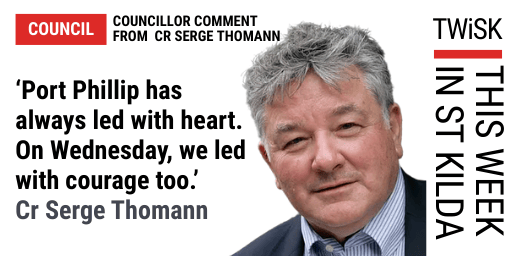
Port Phillip has always led with heart.
On Wednesday, we led with courage too.