The updated Municipal Emergency Management Plan 2025–2028 acknowledges that Port Phillip faces unique vulnerabilities due to its coastal location, urban density, and diverse population.
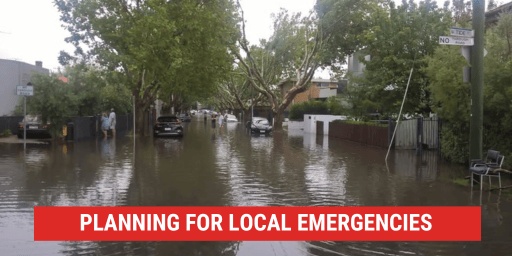
Key risks identified include extreme temperatures (heatwaves), storms and floods, and human disease (pandemics), all of which are projected to increase in frequency and intensity due to climate change.
The plan highlights the heightened vulnerability of groups such as First Nations people, older populations, those experiencing housing insecurity, people with disabilities, and culturally and linguistically diverse residents.
It recognizes that while disasters affect everyone, their impacts are not equal. The plan aims to enable equitable access to support during emergencies.
What kinds of emergencies are we planning for?
The MEMP identifies principal emergency risks including:
- High Risk: Extreme Temperatures (heat and cold), Storm and Flood, and Human Disease (pandemic).
- Medium Risk: Fire (residential and commercial), a warlike act (e.g., bomb threat, terrorism), and Essential Services Disruption.
- Low Risk: Mass Gathering Events.
When has the plan been activated in the past?
Major emergencies that have activated the plan since 2020 include:
- Heatwaves (March 11–13, 2025; February 1–4, 2025; March 9–11, 2024)
- A warlike act (firebombing of the Adass Israel Synagogue on December 6, 2024)
- Storms (February 25, 2024; June 9, 2021)
- Oil spill (January 5–10, 2023)
- Flood (October 13, 2022)
- Earthquake (September 22, 2021)
- Factory fire in South Melbourne (May 6, 2021)
- Coronavirus‑19 Pandemic (from March 4, 2020)
Who does what in emergencies?
The plan outlines command, control and coordination mechanisms, with Victoria Police responsible for coordination at regional and municipal tiers.
The Municipal Emergency Coordination Centre (MECC) is located at St Kilda Town Hall. The nearest Incident Control Centre is at Fire Rescue Victoria, 450 Burnley Street, Richmond 3121.
Council is the lead agency for local emergency relief and recovery, with recovery efforts focusing on the impacted community and involving various agencies and community groups.
FYI: The City of Port Phillip convenes and chairs the MEMPC, facilitating local governance and inter‑agency coordination; however, the MEMPC is not a Council committee.
The MEMPC includes representatives from Victoria Police, Victoria State Emergency Service (VICSES), Fire Rescue Victoria (FRV), Ambulance Victoria, Department of Health, Department of Families, Fairness and Housing (DFFH), Australian Red Cross, and Council, among other partners as appropriate.