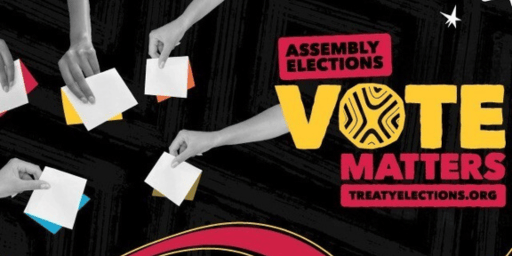
Voting is underway for the Victorian First Peoples’ Assembly, the elected body that will represent Aboriginal communities as Victoria moves from Treaty negotiation into Treaty implementation.
This election is different from those that came before it. For the first time, the Assembly is being elected as a permanent institution of governance, established in law and central to how Treaty commitments will be delivered, monitored and enforced.
This vote helps decide who will hold the State to account on promises already made.
Why should non‑Indigenous Victorians care?
Because Treaty is no longer an abstract idea. It is now part of Victoria’s legal and political architecture. Decisions emerging from Treaty will shape policy in areas including health systems, education outcomes, justice reform, housing, land use and economic participation.
The Assembly does not pass laws, but it has the authority to question ministers, scrutinise government performance and advocate for systemic change. That kind of influence inevitably ripples beyond First Peoples communities.
This election is also a test of democratic maturity. Aboriginal Victorians aged 16 and over are choosing representatives in a process grounded in self‑determination – something First Nations people were historically denied.
But a shadow is being cast by the November State election
However, the treaty is brewing as a significant point of difference in the upcoming State election in November. The Victorian Liberal Party is entering the election with a pledge to repeal the Statewide Treaty Act within the first 100 days of government. One can only speculate about the stance that One Nation candidates will take.
This has made the Assembly election a high‑stakes moment for supporters of Treaty, who see strong voter participation as evidence of legitimacy and durability.
Key facts
Voting closes 12 April 2026.
All enrolled Aboriginal and Torres Strait Islander people aged 16 and over can vote.
Successful candidates will serve four‑year terms as part of the new permanent governance structure known as Gellung Warl (translates to “tip of the spear”).
The elected representatives will be paid as full-time officers on a salary to be confirmed.
There are at least three candidates indicating Boonwurrung connections: Lisa Rose Thorpe, Robert Ogden and Indi Clarke.