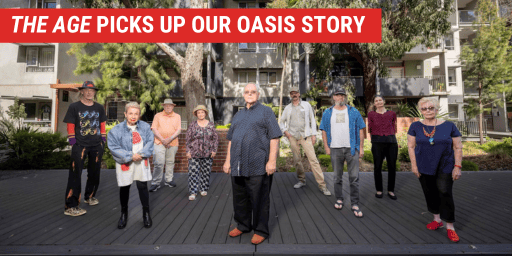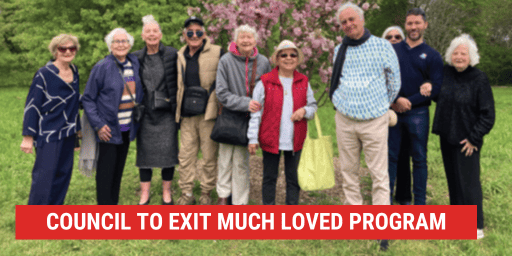
The unanimous decision ends council delivery of the long-running “Better Together” social inclusion program, which provides activities, transport and support to around 60 seniors.
The council vote means it will no longer provide CHSP‑funded social support groups, transport or delivered meals. Instead, it will redirect resources to council controlled initiatives such as the Hop‑on Hop‑off bus, Linking Neighbours, the Community Connector and the new Positive Ageing Team, alongside a $160,000 annual boost to aged care spending.
Mayor Alex Makin said the decision was prompted by the new Commonwealth Aged Care Act and the pressures it creates for councils operating in a competitive market. He argued that the reform provides an opportunity for Port Phillip to design its own support model for a broader group of older residents.
The bottom line: council‑run CHSP services will cease by June 2026.
Confusing Last‑Minute Amendment
The meeting saw an emotionally honest procession of public submissions, prompting councillors to briefly withdraw to explore an alternative motion.
Crs Halliday and Mears returned with amendments presented on screen during the meeting. The additions did not alter the decision to exit CHSP services but required:
A report on the service handover and client transitions;
A follow‑up report 12 months after implementation of the Positive Ageing Model;
Community input into future transport and social programs, within the existing budget.
Many seniors present said they were unsure what had been decided. The minutes later confirmed that the amendment added only minor clauses and did not alter the exit outcome.
Email Blunders Deepen Community Frustration
If confusion was high on Wednesday, it escalated further on Friday when CHSP participants received two “Important Update on Your Aged Care Services” emails – both recalled shortly after being sent.
At the time of publication, no other communication had been issued to seniors, despite earlier commitments to keeping clients informed at every step.
Read the two withdrawn communications
Withdrawn letter sent to clients | Withdrawn FAQ for clients
What seniors told Council on Wednesday
During the meeting, residents shared deeply personal accounts underscoring the importance of the Better Together program.
Speakers highlighted the program’s critical role in combating isolation, fostering community, and providing vital support for seniors.
Rita Perri from Elwood shared a deeply personal account of how the program transformed her husband’s life, who has been unwell for 15 years and struggles with English. “This group has changed everything. For the first time in years, he found friends, people who share his background, his struggles, and his story,” she stated, emphasising that the program is “not optional. It is essential.”
Gillian Graves, an 88-year-old resident of Elwood who is almost totally blind, eloquently articulated the program’s value. “There’s a maxim well known for happiness in old age. It is something to do, someone to do it with and something to look forward to. And this is exactly what the social inclusion program does for us all today,” Graves remarked, reflecting bitterly on her 70 years of paying taxes and council rates.
Ada Nardella, also from Elwood, echoed the value of friendship and support. “It would be just devastating for us all because we’ve made friends and the people who help us, they’re wonderful,” she said, highlighting the program’s role in preventing isolation and depression.
Clare Forrest from Elwood brought a broader perspective to the discussion, emphasising the “currency of care.” She argued, “if we unbalance the currencies and only look at the dollars and cents without looking at the currency of care, then that’s when we, as a whole society and a community are in strife.”
Anna Vaisman from St Kilda shared a poignant story of finding solace and purpose after the loss of her husband. “I enrolled in the social support program, and it really changed my life,” she explained, urging, “Please don’t close such a needed service. Please don’t leave us alone.”
Alfonso Salonga from Balaclava, speaking on behalf of vulnerable seniors, stressed the program’s importance for those with physical limitations and lack of family support. “The support program keeps us active and strong. With withdrawing from this program will reduce community connection and cohesion, loneliness, and isolation will increase,” he warned.
Martina Macey focused on the community bus service, an integral part of the program. “The community bus is not just a bus service. It is a mobile community that picks people up along the way to a common destination,” she asserted, highlighting concerns about its reliability and lack of promotion.
Claire Humphreys from Elwood praised the dedicated staff. “[They] provide us with a with a family atmosphere and really well I know I’m not really going over the top when I say this, but we really sort of love each other,” she shared, emphasizing the trust and care provided.
Philip Whiteman from St Kilda expressed concern about the federal government’s “My Age Care program” and its current disorganization. He suggested, “if you could leave it until June 27, which I think is when your funding goes through, then at least it gives us a chance to keep this momentum going.”
Marie Smith from St Kilda delivered a powerful “victim impact statement.” “We are not faceless numbers on the spreadsheet. We are real people in your community, the community you represent. We are voters, and we have a voice,” she declared, demanding to be heard.
Lisa Cunningham from St Kilda spoke on behalf of her 85-year-old father, Graham, who battles [serious health issues]. “In the last two months whilst not being a part of the activities, his appetite life for life became apathetic… But last week, when he was rejoining the group, he was up on his own accord at 8 am and returned from the day with a big smile and saying it was great,” she recounted, questioning how the council could consider cancelling such a beneficial program.
Laura Alfonso from Elwood highlighted the program’s role in maintaining independence and building connections. “Cancelling this program would have a serious impact on ageing vulnerable seniors who have limited mobility,” she stated, also suggesting that insufficient attendees might be due to a “lack of promotion.”
Finally, Liliana Carranza from Elwood, Laura’s neighbour, expressed disappointment that older people are “once again fighting this council to retain basic services and dignity.” She questioned the timing of the proposed cuts, stating, “I see no reason for the council to repeal the Better Together program at this time,” given that federal funding changes are not expected until June 2027.
The collective message from the submissions was clear: the Social Inclusion Program is a lifeline for many, providing not just activities, but essential social connection, care, and dignity for Port Phillip’s elderly residents.
FYI Council’s current Better Together program
Image credit: the image used is from the page above.
Mayor’s statement to TWiSK in full
Council is committed to supporting older people to age positively in our community and has been a proud provider of Commonwealth Home Support Program services for many years.
Like some other providers, Council has had to review its continued participation in delivering Commonwealth Home Support Program Services given Commonwealth Aged Care Reforms and the implementation of the new Aged Care Act.
Regrettably, it is becoming increasingly difficult for services like Port Phillip to remain in the provision of these services.
While the new model will be different it does provide an opportunity for Council to support a broader range of older people in Port Phillip and design a service that aligns with local priorities and needs without the pressures of a competitive market and external referral pathways.
Q: Will this include a review of the 2024 withdrawal from Home Care activities and the transition to other providers? If not, why not?
The report that Council called for will cover implementation of the transition plans agreed with the Commonwealth for the 2024 and 2026 relinquishment processes.
Q: Does Council have any data on the success or otherwise of former Home Care clients engaging alternative providers?
In 2024, Council’s Home Care clients were supported to transition to a provider of their choice. At the time of transition there was no break in service continuity and clients retained their existing service levels.