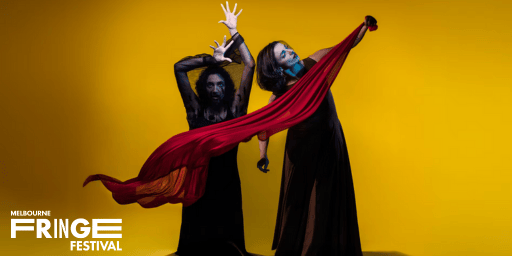
The stage is awash in blue light, a circular black ring at its centre. A silent sentinel straddles a step-ladder upstage as a haunting drone reverberates – calm before the storm. Figures emerge from each wing in white shirts and black pants, swords upright, marching in slow, deliberate rhythm. They turn toward us, the audience exposed beneath lights that refuse to dim.
Leading the pack, Titus enters the ring. The energy shifts: they swing in synchronicity, blaring guitars punctuating the action with hard-rock ferocity. The enemy intrudes – the Goths, in Vivienne Westwood-esque tattered plaid, fight back. The cycle begins.
Ultra-violent and seldom-performed, Titus Andronicus occupies a less esteemed place in the Bard’s vast catalogue. Its plot is often described as mechanical and melodramatic; its characters are dismissed as mere instruments of vengeance. Yet, in the hands of Theatre Works and Th’Unguarded Duncan, Shakespeare’s theatrical black sheep refracts carnage and calamity with caustic, comical bite. Aided by their formidable ensemble, co-directors Kevin Hopkins and Claire Nicholls eschew spectacle in favour of suggestion, crafting a grotesque, stylised nightmare-scape where blood need not be seen to be felt.
Though resisting recontextualisation, this interpretation embraces the modern through Max Hopkins’ original score, which captures the direction’s purposeful abstraction. This evocation of the present is no accident. The company renders the almost 450-year-old tragedy a timely cautionary tale – its countless casualties laying bare the futility of revenge-driven violence and the endless cycle of blood it spawns.
Josh Morrison commands the stage as the titular Roman military hero, his performance a vivid blend of gruff callousness, playful humour, and poignant regret. At the tragic – yet unexpectedly funny – climax, the now one-handed man is almost unrecognisable from the ruthless general whose execution of Tamora’s son set the violent domino effect into motion. Victoria Haslam harnesses Eartha Kitt’s feline physicality and velvet growl as Tamora, Queen of the Goths, seducing, mocking, and commanding in every gesture. Scott Jackson’s portrayal of the petulant, spoiled Saturninus – the scheming emperor who marries a captive Tamora after being spurned by Titus’ daughter, Lavinia – injects much-needed levity amid the brutality.
Rajendra Moodley’s Aaron, “chief architect and plotter of woes,” leans into the cartoon-villain archetype with a knowing wink, his delivery of the infamous “I have done thy mother” landing with the laughter it demands. The ensemble at large moves with fluid precision. The sequence depicting Lavinia’s assault through ritualistic, non-naturalistic movement – culminating in her gruesome reveal – is all the more harrowing in its restraint.
Somehow, despite being Shakespeare’s grisliest bloodbath, this production of Titus Andronicus teases out the humour in its relentless – and progressively ridiculous – violence. I can’t say I expected to laugh along with the rest of the audience as familiar characters are fatally stabbed in quick succession – and yet, I did. With confidence and care, Titus Andronicus bids “Sweet Revenge, farewell.”