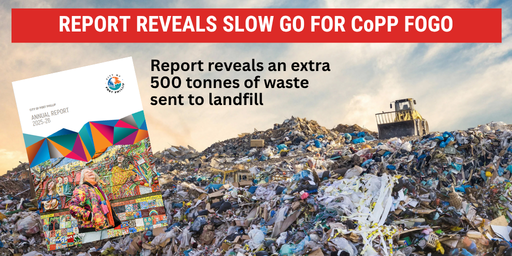
Port Phillip’s 2025/26 Annual Report delivers a sobering reality check: more waste bins has not meant less waste going to landfill.
Food Organics and Garden Organics (FOGO) bins were meant to help the city go greener, but keeping organic waste out of landfill has been a “slow go”.
The FOGO Facts
The numbers tell a disappointing story. Council aimed to divert 45% of waste from landfill in 2025/26 but achieved just 37.15%—7.85 percentage points short, and down from 39.5% in 2024/25.
Port Phillip sent an extra 500 tonnes of waste to landfill in 2025/26, costing about $120,000 more in disposal fees. Meanwhile, Victoria’s landfill levy has risen 64% in four years, adding pressure to council budgets.
Challenges for Residents: Practical Barriers
What is holding back waste diversion? Council does not yet have the full picture. Local housing patterns point to practical hurdles that may make it harder for residents to use FOGO bins.
About 74% of Port Phillip’s homes are in multi-unit developments, and 44% of residents rent. For people in apartments and shared complexes, FOGO can be tricky:
Shared Bins: Communal waste areas can cause confusion and make it harder to hold individuals accountable.
Limited Space: Small apartments make sorting waste and storing multiple bins difficult.
Frequent Moves and Information Gaps: Moving between homes can make it harder to keep up with local waste services. Renters may be less familiar with those services and may miss Council’s ongoing education campaigns.
Challenges for Council: Policy and Practical Hurdles
Council faces practical pressures and political uncertainty. Across the sector, councils are dealing with rising costs and difficulties sourcing bins and other waste equipment.
With a state election approaching, the Victorian Opposition’s proposals could upend local waste plans. They include capping council waste charges, reviewing landfill levies, requiring weekly garbage collections and removing kerbside glass recycling requirements.
These changes would clash with Port Phillip’s plans to move single-unit homes from weekly to fortnightly garbage collections in 2027—a proven way to boost FOGO use elsewhere. A state policy shift could force Council to rethink its approach.
Council’s Action Plan
Council began expanding kerbside FOGO in January 2026 to an additional 900 smaller multi-unit properties, each with two or three homes.
Council is also developing a “FOGO uplift campaign”, asking residents what gets in the way and offering targeted education, social media updates and tips for handling food waste in warmer weather. Waste education officers are visiting larger apartment complexes to improve bin room signs and facilities.
Port Phillip remains committed to its Don’t Waste It! Waste and Recycling Strategy 2025-28, but officials say they are reviewing targets and timelines. Turning FOGO’s “slow go” into a success means closing the gap between Council’s plans and the daily realities of apartment living.
Media Response – to be attributed to City of Port Phillip General Manager City Infrastructure Peter Benazic
Why did residents place less organic waste in FOGO bins?
We don’t yet have a complete picture of why residents are putting less organic waste in their FOGO bins. That’s why Council is developing a FOGO uplift campaign to better understand what’s behind the decline and how we can improve participation.
As part of this work, we’re looking at a range of factors that may influence FOGO participation, including residents’ housing and living arrangements.
About 74 per cent of dwellings in Port Phillip are multi-unit dwellings (MUDs) and approximately 44 per cent of residents across standalone homes and multi-unit dwellings rent their properties.
These residents can face practical challenges with waste separation, such as shared bins, limited space for waste separation, less familiarity with local waste services and less exposure to waste education.
Our waste education officers are already working directly with MUDs to review waste infrastructure and improve information for residents, including signage in bin rooms.
As part of the FOGO uplift campaign, we’ll also undertake community consultation to better understand how these residents are using the service and what barriers they may be experiencing. These insights will inform a targeted education and engagement campaign focused on keeping more food waste out of landfill through increased FOGO service participation.
By how much did waste diversion miss its target?
Council’s landfill diversion target for FY2025/26 was 45 per cent. We achieved 37.15 per cent, which was 7.85 percentage points below the target.
This was also lower than the 39.5 per cent diversion rate achieved in FY2024/25, following the introduction of kerbside FOGO for single-unit dwellings (SUDs) and MUDs.
How much additional waste was sent to landfill, and what was the associated cost?
An additional 500 tonnes of waste was sent to landfill in FY2025/26 compared with 2024/25, at an additional cost of approximately $120,000.
What actions and deadlines has Council set to reverse the decline?
Our Council began responding to the decline in January 2026 when we identified another 900 smaller multi-unit properties of two to three dwellings which were eligible for kerbside FOGO.
Kerbside FOGO was rolled out to these properties with residents receiving information before and after their bins were delivered. We’re now monitoring that expansion and increasing our focus on education and engagement with residents in multi-unit properties.
Council is also developing a FOGO uplift campaign to improve participation and keep more food waste out of landfill. Community consultation will help us understand what’s stopping or discouraging some residents from using FOGO so we can target further education and engagement.
In the meantime, we’re continuing to use social media and other communications to encourage correct waste disposal and greater use of FOGO. Upcoming information will include practical advice on using FOGO bins during warmer weather.
Does Council expect to meet its longer-term waste and emissions commitments?
Council remains committed to the Don’t Waste It! 2025-28 Strategy but is reviewing some actions and targets in view of current uncertainties. Councils are facing higher costs and challenges sourcing waste infrastructure and bins. There is also uncertainty about what Victorian Government waste policy will look like after the State election.
State Opposition policies include weekly landfill collections, removing kerbside glass recycling requirements, capping council waste charges and reviewing landfill levies.
If introduced, some of these changes would affect Council’s ability to deliver parts of the Strategy, including the planned move from weekly to fortnightly landfill collections for single-unit dwellings in 2027.Fortnightly collections have helped reduce landfill waste in other council areas, so we’re continuing to learn from their experiences. At the same time, we’re reviewing the timing and approach of our plan in case it’s impacted by Victorian Government waste changes after the election.
If that happens, we’ll consider what it means for the Strategy and update our community.