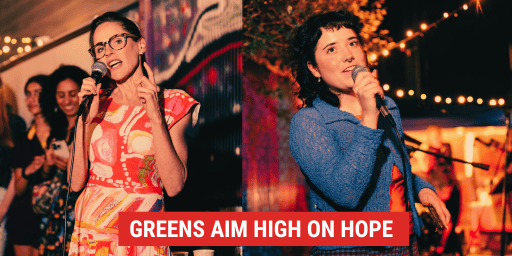
Next in our series on campaign launches, TWiSK ventured into the crowd at the laneway café behind Space2b in Chapel Street St Kilda to witness and report as Victorian Greens leader Ellen Sandall introduced Albert Park candidate Sonya Semmens and Brighton candidate Ebony Bain (pictured above).
Sandell opened the launch with a diagnosis of the mood she said she is hearing everywhere. People feel they have done “everything right”, she said, yet are sliding backwards: graduates start out “with tens of thousands of dollars in debt”, wages stagnate while costs rise, and rents and house prices march higher each year. One young man, she recalled, likened it to “chasing a ball” he would never catch.
She stitched those everyday pressures to bigger fears – climate impacts and international conflict – arguing the feeling that “the world is on fire” is not inevitable but the outcome of decisions by Labor and Liberal governments.
While services “crumble” and housing slips further out of reach, she said, billionaires and banks are thriving, and fossil fuel and gas companies are “making bank”.
Her remedy was the party’s pitch for structural change, including caps on rent increases and free public transport funded by higher taxes on banks and big corporations – and an election campaign with a blunt objective. “We’ve tried really hard to improve them,” she said of the major parties’ record. “Now… replace them.”
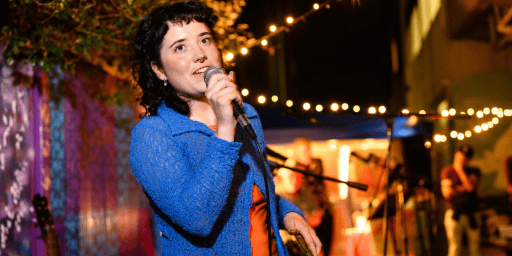
Bain goes local
After Sandal spoke in sweeping terms about an economy tilted toward the powerful, Bain brought the theme down to street level. Apologising for checking her phone “to make sure I stay on script”, the Brighton candidate ran through three campaigns she said show what organised locals can achieve and what they still must fight for.
First was the Yalukit Willam Nature Reserve, a former golf course that Bain said was once slated to become more sporting fields until community pressure helped convert it into a nature reserve with plantings, events and weekly activities. Now, she warned, the group may lose the lease on its community “hub” space.
Next came the Hampton community kindergarten, where residents pushed back against a proposal to replace the kinder with a “big corporate” style structure. The result, Bain said, was a vote to keep community kindergartens in Bayside – a local win she argued echoes disputes playing out across Melbourne.
Her third example was closer still: community housing “just around the corner” where tenants, she said, have faced eviction as properties are sold. Bain questioned why council was allowing the sell-off when it had gifted the apartments to the operator in the first place.
The thread running through the stories was a suspicion of corporatisation and a pitch for participation. There were the staples of campaigning, she said – door knocking and leafleting – but also conversations at school drop-offs and community events. “Come and chat to me if you want to be involved,” she told attendees.
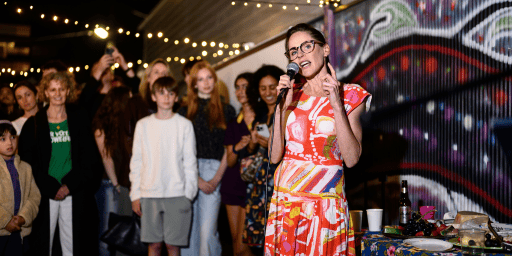
Semmens aims high
Finally Semmens, known to many as the high-profile Greens Macnamara candidate in the last Federal election, flipped the format again. She promised “not… a long speech” and instead asked the crowd to call out what worried them about politics and daily life. The answers came quickly and from all corners of the room: wealth distribution, political donations, climate change, the NDIS, homelessness, funding for the arts and medical research, native forests, and Australia’s role in “funding war and violence”. The rapid-fire list gave Semmens her frame: these anxieties are connected, she suggested, and they are why people end up in events like this one.
She then asked what gives people hope? This drew replies of “young people”, the Greens, and recent political upsets overseas. Semmens cited campaigns that moved from “this is impossible” to “this is happening”, arguing their common ingredient was not ideology but organisation: bringing people, scattered across different feeds and facts, “onto the same page” so they could act as a collective.
She pointed to a recent Australian flashpoint where, she felt, voters across the spectrum asked why governments would cut the NDIS while not taxing gas exports more heavily and while funding war. Like Sandal, she landed on a single, chant-ready conclusion: the Greens should stop trying to improve the major parties and “replace them.”
Between the speeches, the room’s warm theatrics did some of the persuasion on their behalf: home-cooked food, familiar faces and a reminder that politics is still made in community spaces like this laneway café as much as in parliament.
Taken together, the three women weaved an argument that inspired the Greens crowd – and the online fundraising drive reached the $5000 extra target in quick time.
And then the dancing started.

Images by Julian Meehan www.julianmeehan.com